Sometimes, You Can Get What You Want


butterpecan

A tub of parve butter pecan ice cream about to head into the deep chill of our garage freezer.

I had a sudden hankering for butter pecan ice cream when I sat down to write this. Instead, I ate a salad, which was delicious, by the way, but still wasn’t butter pecan ice cream.

Before the ice cream distraction, I wanted to tell you a very nice story about my Kitchen Aid. You may recall that I blew it out baking challah a few months ago and decided to invest in an Ankarsrum mixer, a sturdy Swedish machine with room for double the amount of dough.

How do I like it? Well, it does a nice job on my challah recipe. It’s good-looking, too. Yet I’m still adjusting to its operational nuances and learning how to lock in the attachments and struggling to understand what some of the attachments are for.

My friend David, who convinced me to buy the Ankarsrum, uses his machine for all his baking, not just challah. Despite his encouragement, I’m not there yet. I admit, though, this may be because I remain in the thrall of my Kitchen Aid, which has sat – forlorn and unused – in the shadow of the Ankarsrum on the counter for months.

My husband told me not to give up hope, that he might yet get it working. He ordered a number of parts online. He and David then performed the surgery, laying out the Kitchen Aid in pieces across the dining room table. Sadly, the patient did not recover. We all agreed that a professional repair wasn’t worth the cost.

When I had lost all resolve and began to mourn, my husband had an interesting idea. By interesting, I mean kooky. He called one of his Croatian landsmen – this time Ico, our auto body guy. Surely, you see where this is going. My husband dropped the Kitchen Aid off at Ico’s shop.

At the time, a part of me thought this was the strangest of my husband’s interesting ideas. On the other hand, I’m a big believer that it’s the strange things that make the world go round. I pinned my hopes on the possibility that the guy who fixed my minivan after a snowplow backed into it would also be able to restore my kitchen life to order.

My cell phone rang two weeks later. It was Ico, telling me he had completed my “husband’s little project” and that I could pick it up whenever I wanted. I couldn’t thank him enough for bringing my Kitchen Aid back to life.

All good things come to those who wait, I thought to myself. I was grateful to my husband for thinking out of the box and to Ico for his willingness to give the idea a shot.

The Kitchen Aid and the Ankarsrum now sit side by side on the counter, any traces of sibling rivalry suppressed for the sake of shalom bayit. The division of labor is clear-cut. The latter helps me bake challah, while the former helps me tackle everything else, from cakes to ice cream.

Last week, I made pareve pistachio ice cream for Shabbos to test out Ico’s handiwork. This week’s flavor? You guessed it. Butter pecan.

Life Is Short. Use The Fancy Dishes.

zsolnay3

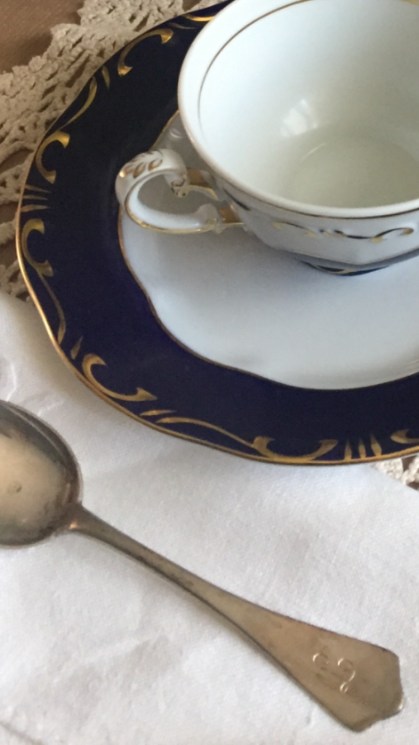
Zsolnay cup and saucer, a relative’s trousseau spoon, a hand-crocheted runner from a friend’s grandmother.


Why do we own this in the first place?

For years now, I’ve felt a strong urge to own less. I ask myself, “Do we really need this?” before returning anything to the shelves as I restore order to our home after Pesach.  The answer, when it comes to silverware and soup pots, is “yes.” But there are also items I hang onto for sentimental reasons. Others get to stay because I’d feel guilty if guests at our wedding more than two decades ago were to stick their heads into the pantry and wonder where the serving piece they gave us has gone.

Still, each time I clean up after Pesach, I manage to get rid of a few things. I pass them along to others who will enjoy them more, or I drop them into the trash, especially when I don’t care for them any longer and don’t think anyone else will either, or I have no idea how they got here in the first place.

I like when the cabinets feel roomier and I can easily take inventory. What I discover year after year is not only that we have more than I want us to own – more than what we need. But there are plenty of pretty things stashed away in there I hardly, if ever, use at all.

I realize this is silly.

I rarely buy paper goods, preferring to set our Shabbos table with the dainty 1950s china passed along to me by relatives who now use disposables on the rare occasion they entertain. For the most part, I don’t keep our things behind glass as if they’re in a museum or an antique shop. There is a lot of coming and going from our cabinets.

On the other hand, I’ve never served on the Zsolnay dishes I bought in Budapest back in the early 1990s, the ones with the deep blue trim and a bit of gold flourish. I fell in love with them on the rebound, after I realized I could never afford a complete set of Herend tableware, the pattern with the butterflies I’d been smitten with when I lived in the Hungarian capital.

The excuse has long been that I would never be able to replace the Zsolnay should a piece of it break during use. But now we have the internet and my reasoning is no longer valid. Besides, it’s the dishes I use regularly that are vintage and irreplaceable.

I resolved to give it air. 

Of course, I’m not alone. Plenty of us have breakfronts filled with things we don’t use because we consider them too fancy for our lifestyle or too valuable to put into commission. But what pleasure are they giving anyone in a cabinet? We can’t take them with us. Plus, they’re more likely to break in transit than at the dinner table.

I came to this realization a few months ago regarding the plethora of vintage table linens I’ve acquired over the years from relatives and friends and friend’s relatives and their friends. I guess once word got out that I like them, I became a depot. In every instance, they’ve arrived like new, never once having been laid out on a table. All of the pieces are either hand-embroidered or crocheted, difficult to launder or impossible to manage without ironing, so I understand why.

Yes, there’s a risk of permanent staining since I eschew plastic covers, which ruin the vintage-elegant vibe. But the alternative is to let all of those beautiful linens spend another generation untouched in a drawer. I now use them, a different one each Shabbos. The cloth napkins, too. It feels right to let them fulfill their purpose in this world.

A quick side note. Bleach works wonders. Napkin rings nicely cover stains on napkins. If you position your plates just so, you can cover indelible markings on a tablecloth.  And if you pull them out of the dryer right away, you can get away with not ironing them at all.

What’s the worst case scenario?

Though I’m not one for resolutions, I resolved to begin using the Zsolnay starting this Shabbos, putting the set into the rotation with my other dishes. Beneath it will be an off-white, open-crochet tablecloth that has napped at the bottom of a dresser drawer for a decade. I can’t wait to see how the table will look when it all comes together. I suspect I will gasp with delight.

The worst case scenario is that a plate will break or the crochet will come undone. The world will continue to spin on its axis. We’ll just end up with fewer things that aren’t to our children’s taste when we reach 120.

In the meantime, I will have enjoyed the pleasure of an elegantly set table and the memories made during meals served on all of those pretty things.

Join me.

Use something special from the back of your china cabinet this Shabbos. Post a photo or tell me about it in the comments.


Wherever You Are, Bravo!

IMG_4398

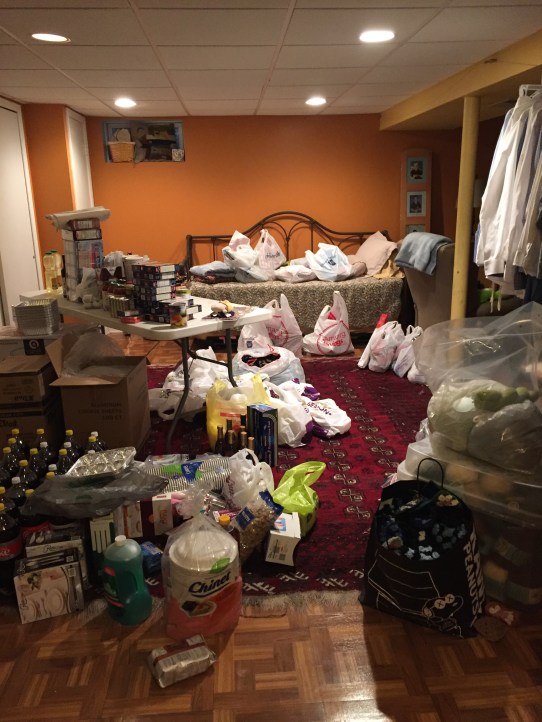
Well, at least we’ve made a dent in the shopping list. And our basement’s ready for our “Home & Garden” photo shoot.

Hi there,

I texted a friend from the store the other day to ask what she’d like me to make for the meal our families will be having together on Pesach. She told me she had no idea. She’s not far enough along in her preparations to have figured that out. The truth is that neither am I. But worrying about her menu was a lot less stressful than thinking about my own.

I bought a pretty bowl, in case she wants me to bring a salad, and a lovely platter, in case she prefers a cake.  I’ll find out when she’s ready.

Anyway, the reason I’m sharing this anecdote is to make a point I like to make every year.

Whatever you are up to in your Pesach preparations, bravo!

Still in the conceptual stage? Good for you!

Distracting yourself from the seasonal reality by shopping for bowls for your friends? Guilty, but it’s okay.

Because wherever we are at the moment, we will G-d willing be where we need to be – cleaned, kashered, and cooked – when we light candles on the eve of the first seder.

That doesn’t mean I think you have a lot of free time on your hands.  But in case you’re looking for a friendly reminder that we’re searching for chametz not perfection, I’m sharing the links to two new articles of mine that went live over the past week.  As you can see, I’ve been very busy writing, most likely to avoid cleaning and menu-planning, but also to pretend I haven’t already found multiple pieces of Wacky Mac in locations where they don’t belong.

Pesach Knows The Way To Our House

How I Got Enslaved To The Holiday Of Freedom

And if you’re in the mood for something a bit more ethereal, here’s an essay that went up today about the ghosts in the Pesach cabinet in our garage.

The Ghosts In Our Garage

I’d love to hear your tips for making Pesach prep a bit easier.  Drop me an email or leave a comment. I’m also bored with my salad regulars and would love suggestions.

Wishing you all a Chag Kasher V’Sameach – a happy and kosher Passover.

Thanks for reading!

Merri

On The Morning I Couldn’t Get To The Milk


Frenchpress

A lonely pot of coffee looking for love ❤


In the scheme of things, the fact there was no milk in the refrigerator that Friday morning was minor.

And yet, it was just after 5 a.m. I’d been up too late and had a million things to do, among them cooking for Shabbos and getting my act together to teach a few hours later. Before I could do anything, before I could even begin to contemplate safely wielding a knife to cut potatoes for the cholent – really to function as an adult at all – I needed a cup of coffee.

I filled the French press with grinds, put up the kettle, and took out the milk, only to discover there was hardly a teaspoon of it in the container. The last person to drink milk left behind just enough to be able to argue that the container was not, in fact, empty.

Yes, I know who the perpetrator was. And no, it was not his first infraction.

On any other Friday morning, I would’ve gone to retrieve one of the extra half-gallons we keep on hand in the basement refrigerator. (Teenaged boys tend to drink a lot of it and I can’t keep running to the store and wow, what a blessing to be able to buy in abundance.) Minutes later, a steaming cup of coffee with a gorgeous layer of foamy milk on top would prove my reward for not waking the offender to demand he go get it for me.

That morning was not a typical morning, however. One son had friends staying over in the basement guest area, which denied me access to the refrigerator that houses the spare milk.

You might be wondering why I didn’t just drink the coffee black at that point. It’s true I’ve enjoyed intoxicating, milkless cups in Jerusalem and the Balkans, and once, a marvelous little espresso at a gas station outside Florence. But alas, my suburban New Jersey kitchen is not a café in Sofia or Sarajevo. Here, I drink an enormous latte. I needed milk.

In the meantime, I located a nearly empty bottle of Diet Coke. (If you’re seeing a theme here, you are correct.)  It was flat as a mesa, but the caffeine would keep me going until I could pick up a cup of coffee at the nearest shop on the way to work.

When I began self-serving Dark Roast into a tall paper cup, the pump on the urn sputtered. Dark Roast was empty. I called out “Excuse me!” to the woman womanning the coffee area. She kindly offered to brew me a new pot, but it would have taken time I didn’t have.

After I poured out the dregs from my cup, I began the ritual from scratch, this time choosing House Blend. And would you believe it? It happened again. Again I called over the woman in the coffee area, who was joined by a second woman. They both offered to brew me another pot, though by then I had even less time.

I settled on something called Mild Roast, whose name alone boded poorly on a morning I needed a jolt in a cup. That the Mild Roast urn was full left me with little faith in its contents.

I thanked the women and they both apologized on behalf of the establishment. I assured them it was fine, that my day would proceed, Dark Roast or House Blend or not, that I might be a little hazy and perhaps a bit edgy, but it was all fine in the scheme of things. Not the end of the world. We laughed about the oversized importance of coffee in our lives. I bid them a good day.

As I walked towards the cashier, one of the women called out to me, “I wish all of our customers were like you.”

Now, I’m nothing special, so my mind began to imagine all the uncomfortable scenarios those women must face in their line of work to make them say something like that to me. I’d only been polite. I didn’t shout, yell, complain, or demand to speak with the manager. I made the best of a poorly caffeinated situation. And I accepted the consequences of not planning ahead. I should have remembered to bring an extra container of milk upstairs the night before, knowing the teenagers could’ve slept until noon.

The funny thing is that although that cup of coffee may not have had the strength I needed to get through the day, I was glad for it in the end and grateful for the reminders that came with it. Patience, compromise, and kindness are assets, honeyed manners that catch more bees than gruffness ever will.

Turns out Mild Roast was the best cup of the day.

Some Losses, A Few Breaks, And A Little News From My Kitchen

I tend to hold onto things. I’m sentimental to a fault, the keeper of ticket stubs, school play programs, and birthday cards. I prefer the old to the new, the bits that speak of family history, the pieces imbued with love from those who handed them down to me. I’m also a tinkerer who married a tinkerer. We like to fix things, salvage, upcycle, and stretch out the life of what we own.

Above all, I like to keep everything I hold onto in order. But the past few months have reminded me that we’re not in control of very much – not our losses or our gains. Sometimes, the best we can do is to just accept things as they are, to welcome change and embrace the new.

Let me fill you in on what’s been happening:

First, Things Began To Disappear

We were leaving a wedding when I realized that a costume brooch I inherited from my great aunt had fallen off the vintage clutch to which I pinned it more than a decade ago. Though in vain, I searched beneath the table, on the dance floor, in the bathroom. I loved the brooch mostly because of its imperfections, like the missing rhinestones that reminded me how much my great aunt adored me despite my failings.

At home a week later, I lost one of my pearl earrings, a simple pair I liked to wear every day. Not long after, I misplaced one of a second pair of pearls, the nicer set, a gift from my husband. Now I’m left with two single earrings that don’t match. Since earrings are one of my few adornments, I began wearing a faux pair I bought for $5 on a table near Penn Station back in 2004.

I turned over a glass in the cabinet, which is what my grandmother would have done. I also recited the Rabbi Meir Baal Haness blessing for lost objects and put something in the pushka. Now I’m hoping the earrings will turn up when I clean for that holiday starting with a P.

Next, Things Began To Break.

I was making coffee one morning when a mug fell out of the cabinet. It landed hard on my favorite plate, shattering it to pieces. I’d found that plate on the clearance shelf at Anthropologie and took immediately to its misshapenness, red color, and bold blue floral design. Plus, it looked like something from another era and it was the perfect size for the small servings I’m trying to eat. Alas, there was no gluing it back together.

Then my rubber rain boots cracked on the bottom and there was no fixing those. My favorite reading glasses, the tortoiseshell ones from the bookstore, broke next. Lastly, my Kitchen Aid blew out while mixing a batch of challah dough.

I Had To Buy a New Dough Mixer.

I’ve been baking challah for almost 15 years.  I came to it begrudgingly, but fell head over heels with every step of the process. I love the aroma of proofing yeast, the kneading, the braiding, and the blessing one recites on the dough. Another perk is that my family likes the taste of the end product.

While all of that is true, I would never have kept it up without my Kitchen Aid stand mixer. But a Kitchen Aid, at least the newer ones (I hear the old ones are real workhorses and that doesn’t surprise me), is not designed for the repeated beating of weekly challah baking. Mine had already spent two expensive stints in a Kitchen Aid hospital. After it broke this time, I knew I needed a sturdier machine.

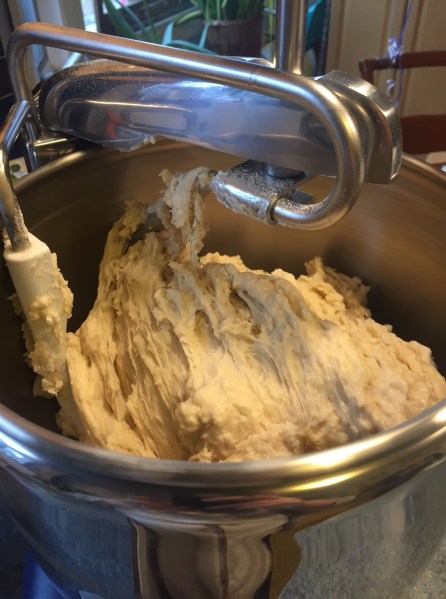
When we were down to the last few challahs in the freezer, I did my research and invested in a Swedish-made Ankarsrum Attendent. It was love at first sight. This past Sunday, I baked a few inaugural batches of challah. Order has been restored to my kitchen, though I’m still hoping those earrings will turn up, wherever they went missing.

Isn’t this beautiful?

ankarsrum

These Things Recently Happened In My Kitchen, Too.

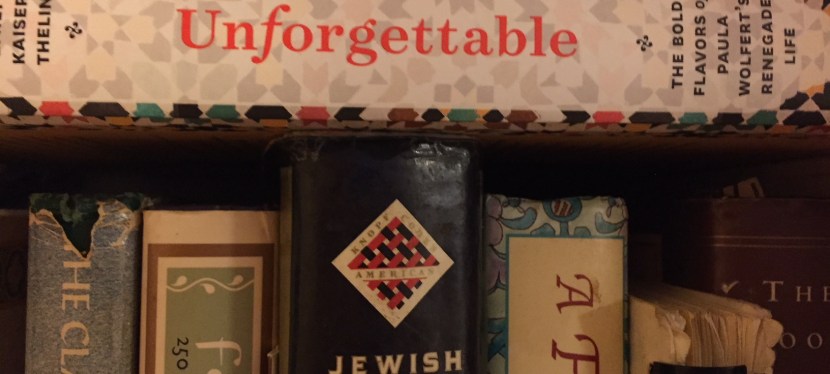
I made a decision a few years ago not to buy any more cookbooks. Instead, I get most of my new recipes online, printing out the keepers and storing them in a three-ring binder. But I was delighted when my friend Sherri surprised me with Unforgettable, Emily Kaiser Thelin’s stunning new volume, for my birthday. Part biography, part cookbook, part love story with food, the book shines a light on the life of Paula Wolfert, the maven of Mediterranean cuisine, who is losing her memory to dementia.  There’s one recipe I have my eye on making soon, but for now, I’m just enjoying the story.

And here’s a recent essay of mine, set mostly in my kitchen Stealing Time From The Cosmos. I hope you’ll read and enjoy, even if you yourself are not an early riser.

Tell me, what are you up to lately in your own kitchen? Leave a message in the comments.

Love,

Merri

My Year In Books 2017

Another year, another book list.

The world seemed to change in 2017 and my book choices mirrored the sense I was trying to make of it all. The online news proved a time-consuming distraction, and my obsession with it accounts in great part for what is a shorter list than usual.

I read far less current literary fiction and fewer memoirs – my favorite genres – than I usually do. Instead, I took the time to revisit a few classics and to fill in some gaps in my literary c.v. They seemed to be the right things to have on my nightstand at the time. Their words and wisdom, messages and metaphors set the mood for my experience of 2017.

Last year, I adored Amor Towles’ A Gentleman in Moscow so much I read it twice. Nothing swept me away quite like the Count and his nostalgia. When I needed a break from the news this year, I read it a third time.

It wasn’t the kind of year in which I had an absolute favorite, but I’m inclined to say that was less about the books and more about me. And yet, it was a year of meaningful reading. For example, I finally read Aaron Appelfeld’s The Iron Tracks and Edward Lewis Wallant’s The Pawnbroker. Shame on me for not reading them earlier. They are raw and honest Holocaust stories that remind me why books like The Boy in the Striped Pajamas so fully miss their mark.

My pile for next year already towers high. At the moment, it’s filled with books by Jewish women writers and I cannot wait to read them all.

Now it’s your turn. Tell me what you’re reading (leave a note in the comments or drop me an email through my website). I love recommendations. And if I don’t get to them next year, G-d willing, there’s the year after.

And please check out my latest essay on Hevria,  How To Build An Entire World In Negative Space.

Wishing you all health and happiness and plenty of time to curl up with a good book in 2018!

Merri

My Year in Books 2017

#1 The Sense of an Ending by Julian Barnes. Man Booker Prize-winning novella about memory and regret in all their awkwardness, but I wished I could have summoned more feeling for the characters.

#2 Awakening by Kate Chopin.  It’s awe-inspiring that Chopin published this bold novel when she did. It’s an important read, though I struggled as a mother with some of the protagonist’s choices. Chopin’s excellent short story “The Story of an Hour” is the perfect companion piece.

#3 You’ll Grow Out of It by Jessi Klein. I had no idea who Klein was before I began reading this (mostly) light, enjoyable memoir.

#4 The Bicycle Spy by Yona Zeldis McDonough. A story for young readers about a boy who helps a Jewish girl and her family during the Holocaust.

#5 It Can’t Happen Here by Sinclair Lewis. This reads like a playbook on the current political situation in America. It is hard, disturbing, and prophetic.

#6 Antigone by Sophocles. Greek tragedy about a woman who is willing to die for what’s right.

#7 Antigone by Jean Anouilh. A modern interpretation of Sophocles’ tragedy, set in Nazi-occupied France.

#8 Early One Morning by Virginia Baily. The story of a woman who makes an on-the-spot decision to save a Jewish child in Nazi-occupied Rome.

#9 Animal Farm by George Orwell. Another timely classic.

#10 Fortunately the Milk by Neil Gaiman. Wonderful story for young readers about cereal and time travel.

#11 Food Rules by Michael Pollan. Short, interesting book of guidance for the eater.

#12 The Marrying of Chani Kaufman by Eve Harris. I was really disappointed in this book, which paints a one-dimensional picture of West London’s religious Jewish community.

#13 Hoot by Carl Hiassen. A nice clean chapter book about taking a stand for a cause, in this case, owls.

#14 Awake in the Dark by Shira Nayman. Psychological tales of Holocaust survivors and their children that read more like essays than fiction.

#15 The Honeymoon by Dinitia Smith. Fictionalized account of George Eliot’s second marriage and honeymoon. A lovely companion to any of Eliot’s novels.

#16 The Signature of All Things by Elizabeth Gilbert. It’s possible I’m the only person on the planet who couldn’t get into Eat, Pray, Love, but I enjoyed this novel about a 19th-century, self-educated woman who defies social conventions to live a meaningful intellectual life.

#17 The German Girl  by Armando Lucas Correa. Novel about a family on the ill-fated St. Louis. I struggled with the language the author uses to convey different voices, which made it hard for me to get caught up in the story, and I didn’t like the ending.

#18 Daniel Deronda by George Eliot. The marvelous George Eliot’s last novel, this lengthy story is about personal moral reckoning and the individual’s search for spiritual meaning. It also offers a highly sympathetic view of the Jewish pull toward Zion.

#19 The Nightingale by Kristin Hannah. Novel about women who take great risks in World War II France. I enjoyed the storytelling and characters, though I found the book too sentimental for such a serious topic.

#20 Lilac Girls by Martha Hall Kelly. Three women narrate their World War Two experiences – two in Ravensbruck and one in New York.

#21 Reread A Gentleman in Moscow by Amor Towles. See last year’s list for more on that. My Year In Books 2016.

#22 The Circle by David Eggers. A dystopian novel about a young woman’s new career at the world’s largest internet company. I gave up on page 49.

#23 The Pawnbroker by Edward Lewis Wallant. A must-read about a Holocaust survivor who becomes a pawnbroker in New York. Raw and powerful and genuine.

#24 The Obituary Writer by Ann Hood.  A story of two overlapping tales of infidelity. Some lovely parts, but the ending felt contrived.

#25 Ways to Disappear by Idra Novey. I got caught up in the surreal adventure of an American translator who comes to Brazil in search of her author, who has disappeared into an almond tree. Friends who read it with me gave it mixed reviews.

#26 After Abel by Michal Lemberger. I often wonder what the women of the Torah are thinking and feeling, so I treasured this story collection that imagines what happens to a number of them between the lines.

#27 Hungry Heart by Jennifer Weiner. Though I’ve never read her fiction, I really enjoyed this smart, funny, relatable memoir by the novelist.

#28 Murder on the Orient Express by Agatha Christie. I wanted to reread this in advance of the movie release.  I’d forgotten about Christie’s delicious characterizations and relished them all. I still haven’t seen the film.

#29 You Learn By Living by Eleanor Roosevelt. The wrong book for the wrong time, though I felt guilty I couldn’t get through it.

#30 War & Turpentine by Stefan Hertmans. A Flemish artist fights in the trenches of World War I. A heartwrenching, beautiful portrait of one’s man’s life.

#31 The Iron Tracks by Aharon Appelfeld. A masterful story about a survivor who rides the trains through Austria in search of the man who killed his parents.

#32 Irmina by Barbara Yelin. Graphic novel that asks difficult questions about complicity in Nazi Germany.

#33 If All the Seas Were Ink by Ilana Kurshan. A gorgeous literary memoir about Kurshan’s immersion in the daily study of Talmud as she recovers from her divorce and builds a new, beautiful life.

#34 The Ocean at the End of the Lane by Neil Gaiman. I adored this fable about the power of stories to help us process the dark side of human nature and to shelter us from it, too.

#35 Hillbilly Elegy by J.D. Vance. A fascinating and important memoir about white working-class America.